Medisi America
  • Home
  • We Are
  • Services
  • News
  • Contact Us
  • en EN
    • en EN
    • fr FR
    • de DE
    • it IT
    • pt PT
    • ru RU
    • es ES

Human trials could start soon on Adam’s 3D printed bone grafts

By Medisi America on 10 octubre, 2019

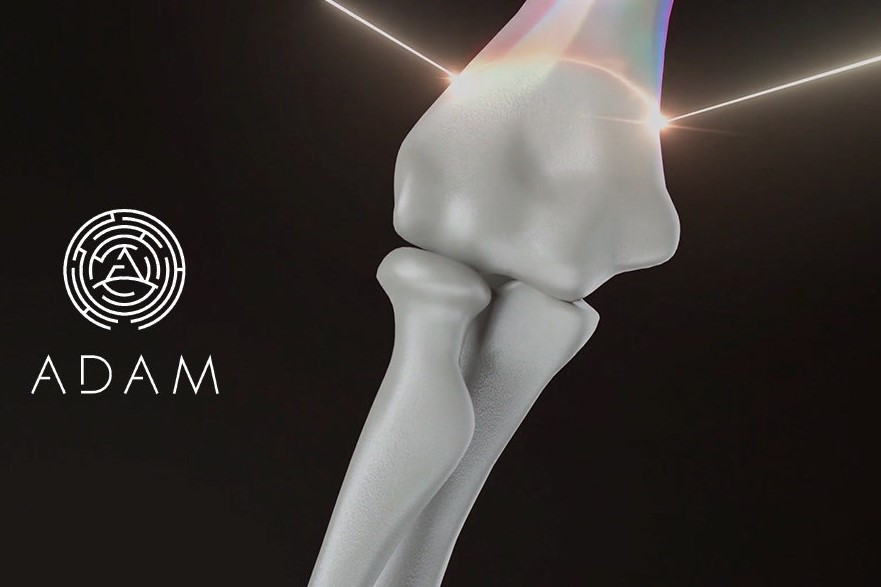
Adam — a young company with technology to 3D print bone grafts made out of ceramic bioglass and modified biopolymer — said today that it expects first human trials to start by the end of the year.

Officials at the Groton, Conn.– and Odessa, Ukraine–based company expect preclinical trials to finish this month. The Adam technology uses Kwambio printers and reduces the standard production cost of synthetic bones in half, from $0.12–$0.15/cm2 down to just $0.08.

Ideally, the bone graft dissolves as new bone grows, reducing the need for additional surgery, according to Adam.

If you want to read more about this news, click here. 

 

Posted in News, Science, Technology.
Share
←  NewerStudy: Abbott, Edwards may have mislabeled hundreds of patient deaths
Older  →Artificial intelligence better than humans at spotting lung cáncer

Entradas recientes

  • COFEPRIS Evolves
  • COFEPRIS Challenges 2020
  • ResMed ventilators recall is Class I
  • Finding a non-invasive way to predict effectiveness of cancer therapy.

NEWS

  • Conferences
  • News
  • Science
  • Technology

Deja una respuesta Cancelar la respuesta

Tu dirección de correo electrónico no será publicada. Los campos obligatorios están marcados con *

Related Posts

  • 10 octubre, 2019

    Deep brain stimulation can be effective for severe depression

    Researchers who monitored people with deep brain stimulation implants for 8 years suggest that the treatment can benefit those with severe depression. Regulators in the United States have already approved deep brain stimulation for the treatment of Parkinson’s disease, epilepsy, essential tremor, and obsessive-compulsive disorder. The treatment involves implanting wires into the brain and a stimulator in the chest …

  • 10 octubre, 2019

    ‘Electronic tongues’ may help diagnose early stage bladder cancer

    New research presents a complex electronic device as a possible new, efficient, simple, and cost-effective way of detecting bladder cancer in its early stages and monitoring people living with bladder cancer. In a quest to find a better way of diagnosing bladder cancer, Spain-based researchers from the Polytechnic University of Valencia (UPV), the La Fe …

  • 18 junio, 2019

    New York Times calls for tightened medical device regulation from FDA

    The New York Times last Friday released an editorial calling for improved regulation on medical devices from the FDA, citing a number of recent controversial devices that have made headlines for injuries and deaths related to their use.  If you want to read more about this news click here.

  • 30 diciembre, 2019

    Researchers produce first laser ultrasound images of humans.

    «Engineers have come up with an alternative to conventional ultrasound that doesn’t require contact with the body to see inside a patient. The new laser ultrasound technique leverages an eye- and skin-safe laser system to remotely image the inside of a person.»   Read more

  • © 2025 MEDISI America - All rights reserved
  • Home
  • We Are
  • Services
  • News
  • Contact Us
  • en EN
    • en EN
    • fr FR
    • de DE
    • it IT
    • pt PT
    • ru RU
    • es ES